RGB Apparels
Men’s clothing · built in 2025
A Bangla-first WooCommerce store for a men’s clothing brand selling t-shirts, shirts, panjabi and winter jackets, where customers pick a size right on the product card and order in two taps.
A clothing website should make size, colour, collection and availability easier to understand than a Facebook post ever can.
Designed for: Clothing brands, fashion boutiques and apparel sellers in Bangladesh
E-commerce website: ৳16,000 one-time
Men’s clothing · built in 2025
A Bangla-first WooCommerce store for a men’s clothing brand selling t-shirts, shirts, panjabi and winter jackets, where customers pick a size right on the product card and order in two taps.
Brands we designed ourselves, with AI-generated product photos, built on the same WooCommerce base as every store we deliver. Not client projects.
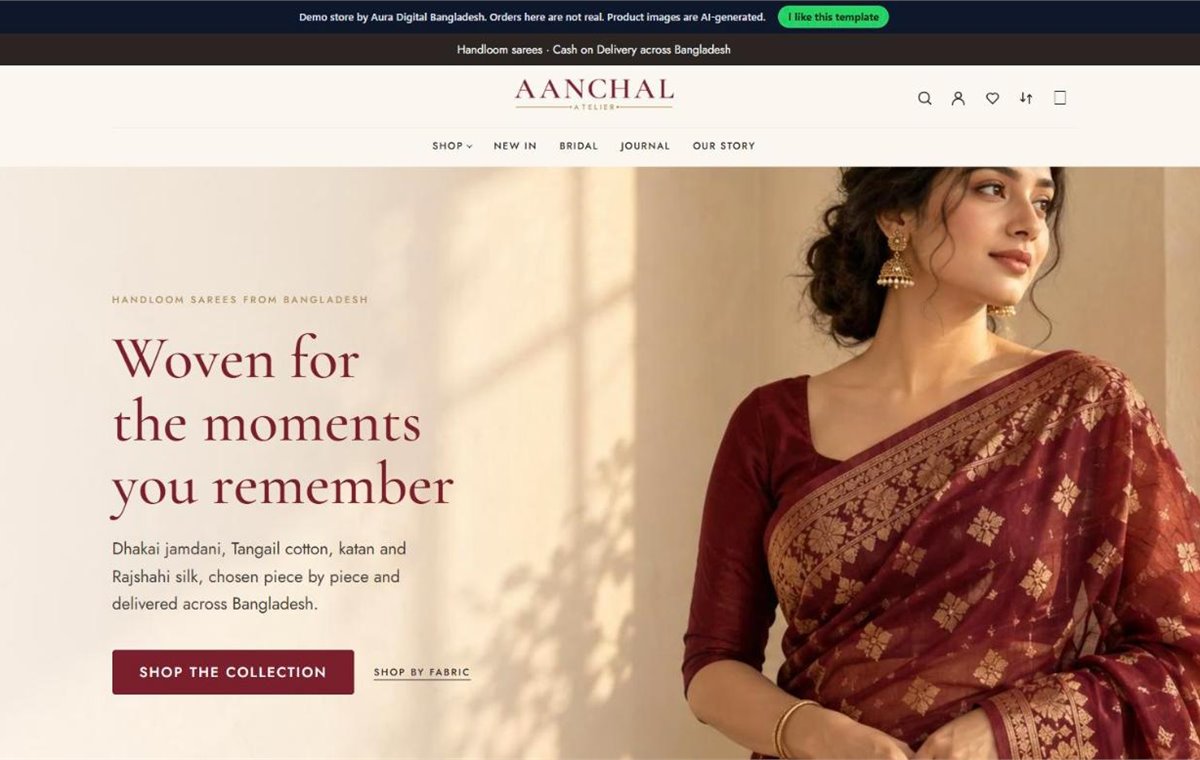
A saree store template (Aanchal Atelier): shop by fabric and occasion, colour swatches that switch the photo, Cash on Delivery. Our own brand, AI photos.
Clothing customers usually decide from a phone and hesitate when fit, fabric or availability is unclear. The store structure should keep collection browsing fast while preserving accurate stock for each option.
Define the size and colour combinations, SKUs and stock rules for each style so a sold-out option cannot be ordered by mistake.
Organise category, occasion, season and new-arrival routes around the actual range instead of forcing customers through one long product feed.
Place size guidance, measurements, fabric, care notes and clear imagery where a buyer needs them before choosing a variation.
The day-to-day workflow must make it practical to add a new style, update variant stock and handle an exchange without editing the whole product page.
Use one record per style with consistent size, colour, price, SKU and stock information before entry.
Build Eid, seasonal, sale or new-arrival collections from the catalogue so social posts can link to a focused landing page.
Give staff a repeatable way to update sold-out variants and apply the published size-exchange policy.
Trust is stronger when measurements, fabric and exchange terms are consistent than when a product page relies on vague “premium quality” claims.
Clean source data shortens the build and prevents customers seeing incomplete variations.
The standard package covers a practical e-commerce foundation. Product migration, paid provider costs and unusual category-specific functionality are confirmed before work begins.
Review website, hosting and exclusions →The best website for a clothing or fashion business lets customers choose size and colour, see what is in stock, check a size guide and order on their phone with Cash on Delivery or bKash. A WooCommerce store does all of this. Aura Digital Bangladesh builds it for a fixed ৳16,000 one-time, with collections, an exchange policy page and Facebook Pixel.
Yes. A product can be configured with combinations such as S, M, L and XL plus colour options, with stock controlled per variation when needed.
Yes. Size guides can be shown globally, by category or on individual product pages depending on how your catalogue is structured.
Yes. Saree and lehenga listings can show fabric, work or embroidery, length, colour and dupatta or blouse details, with photos for each colour. If a product is made to order or needs stitching measurements, the product page can explain the process and collect the details before checkout.
Yes. T-shirts can use size and colour variations, while jeans can use waist and length options with fit names and a size chart. Stock can be tracked for each combination so a sold-out size is not ordered by mistake.
Put the exchange rule next to the size selector and again before checkout, and link a full policy page. The website displays the rule your business actually follows; it does not create one for you, so decide the policy first.
Send the current Facebook page, product list or catalogue. We’ll map the product information and buying flow before recommending features.